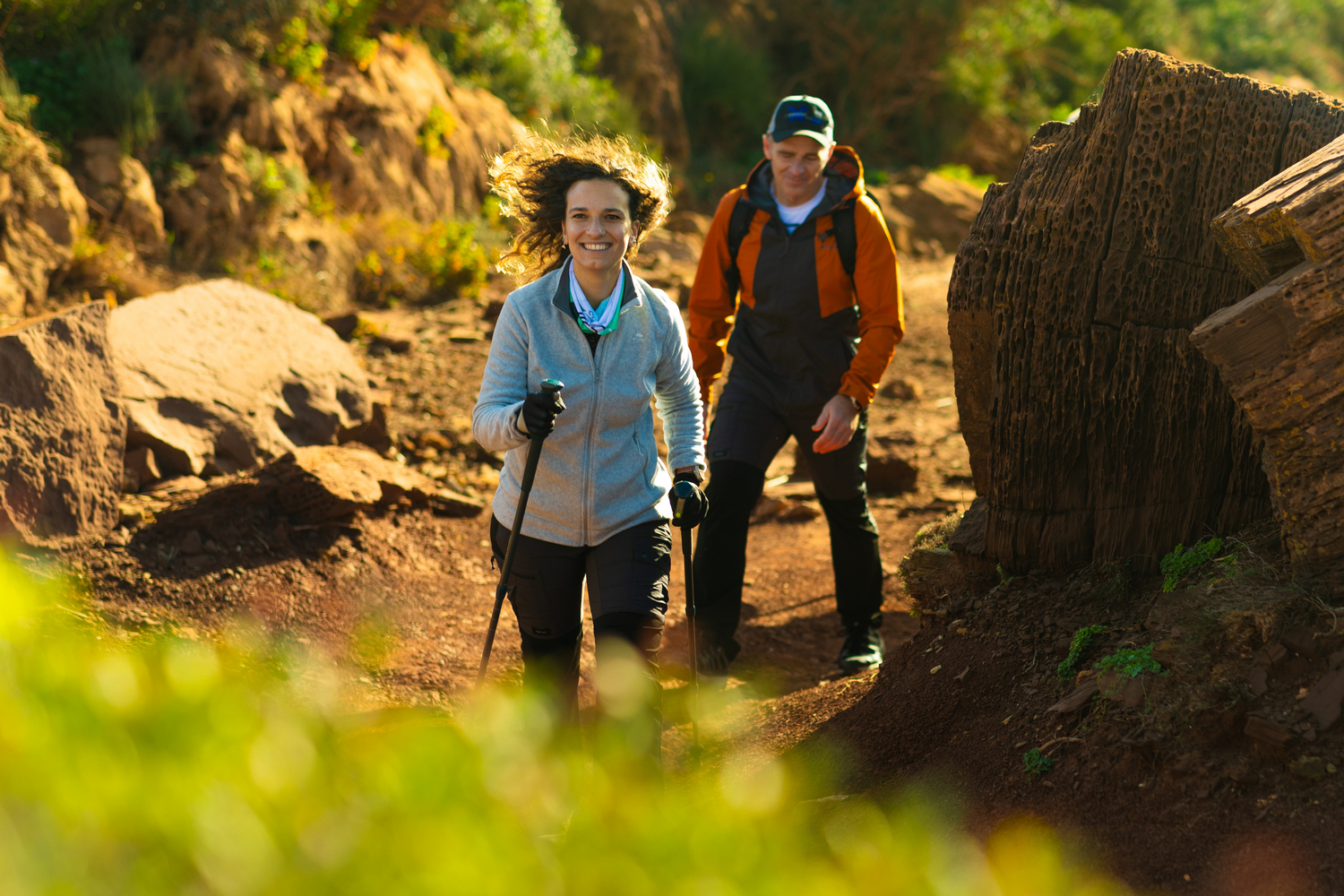
Have you ever done a multi-day route? Or perhaps you’re simply wondering what daily life is like when you’re doing Camí de Cavalls 360º? Here’s what a typical day looks like, from the moment the alarm clock rings until you switch off the light and go back to sleep.
One of the questions we get asked most often isn’t about the route itself, the terrain, the physical demands or the technical challenges. It’s a much more practical question: “What’s day-to-day life like on Camí de Cavalls 360º?”
It’s a good question. Because Camí de Cavalls 360º is neither a holiday stroll nor a high-mountain adventure. It’s something unique, with its own rhythm, its own logic and its own small daily rituals that, by the second or third day, become part of your routine. A routine you’ll probably miss when you return home.
Here’s what a day on Camí de Cavalls 360º looks like.
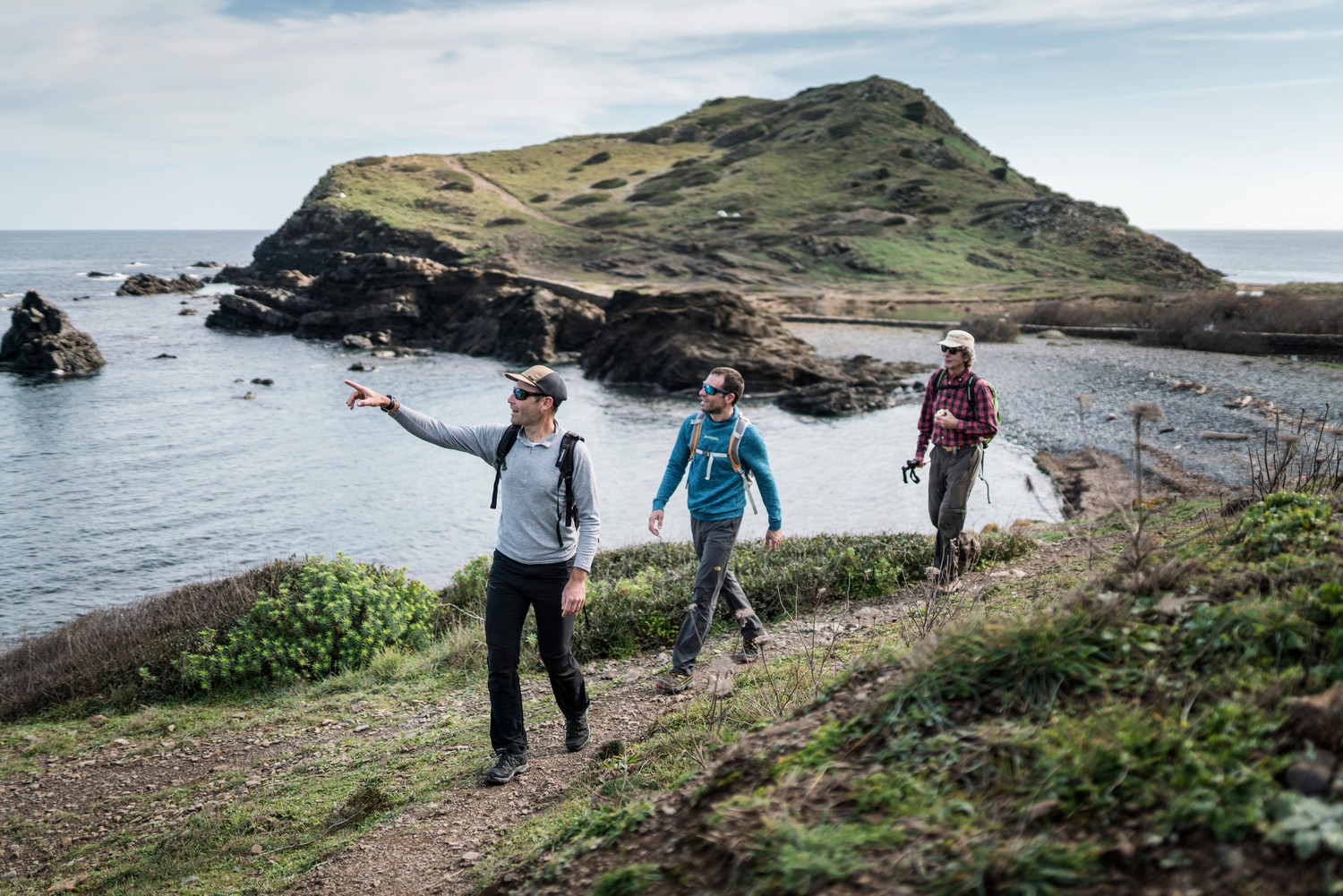
Morning: the first steps
The day starts early and with a good breakfast. It’s the moment to check the weather and decide whether you’ll need sun protection, a waterproof jacket or an extra layer. The amount of water and food you’ll carry should ideally have been planned the day before.
There’s no need to rush, but it’s also important not to delay your departure. Starting late can come at a price: too many hours under the sun during spring and summer, or a lack of daylight during autumn and winter.
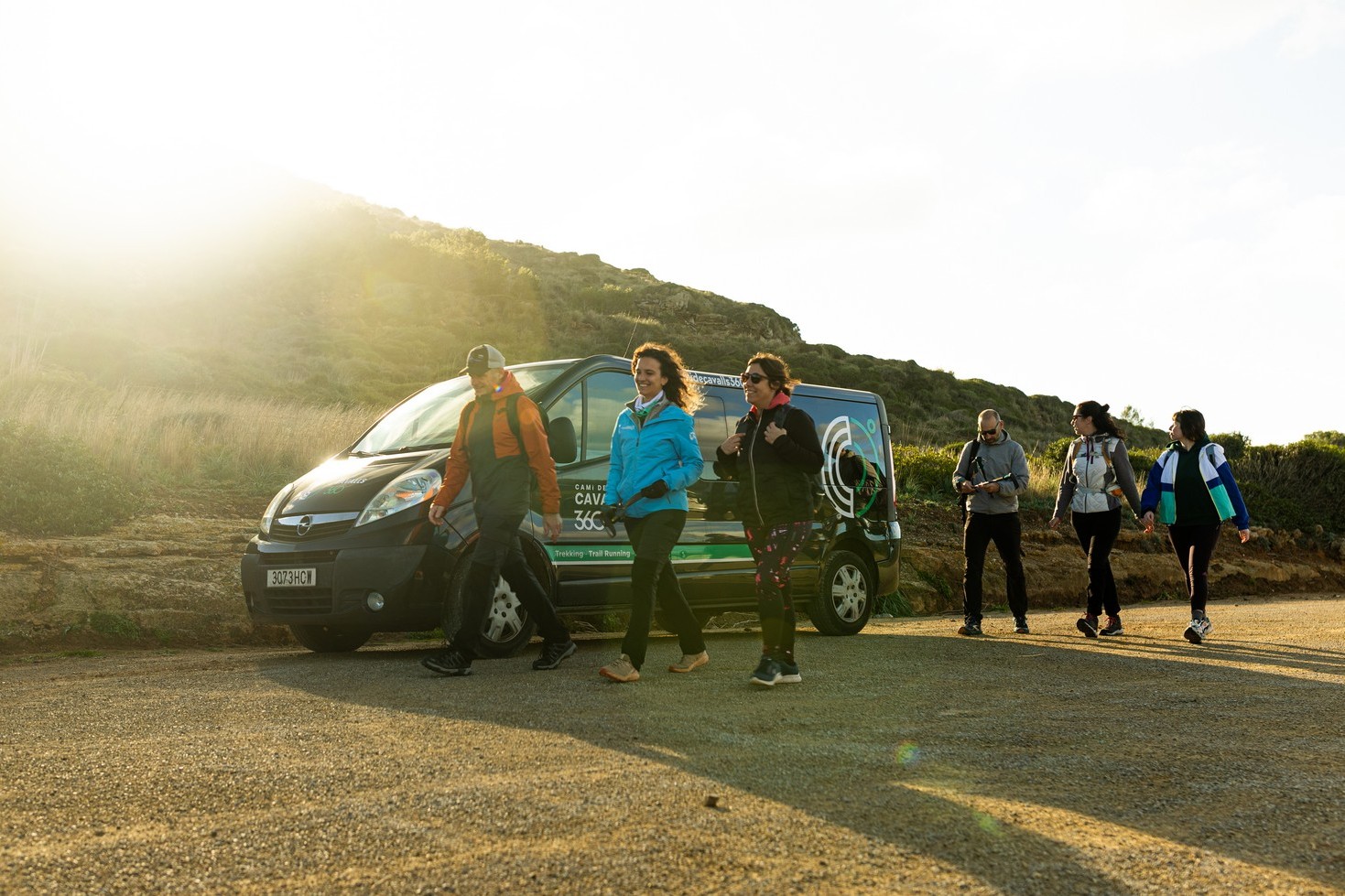
Before setting off, there’s one thing worth remembering: your main luggage should be packed and left where the accommodation staff indicate. The Camí de Cavalls 360º luggage transfer service will collect it and take it to your next accommodation. While you’re walking, your belongings will be travelling towards the place where you’ll sleep that night. Packing your luggage the evening before is a habit you’ll quickly learn, and one that makes every morning much easier.
Then it’s time to get moving. Camí de Cavalls 360º is a linear route: each day begins where the previous one ended. When the starting point doesn’t coincide with your accommodation, transport is arranged by the organisation. We’ll take you to the beginning of the stage and you simply start walking. No logistical complications, no need for two vehicles and no backtracking.
The backpack you carry contains only the essentials: water, food for the day, identification, perhaps a spare layer in case the weather changes, plus your Camí de Cavalls 360º route guide and map. The GPS track for the stage has already been loaded onto your phone, watch or GPS device from day one.
All that’s left is to hit the trail.
Mid-morning: at your own pace
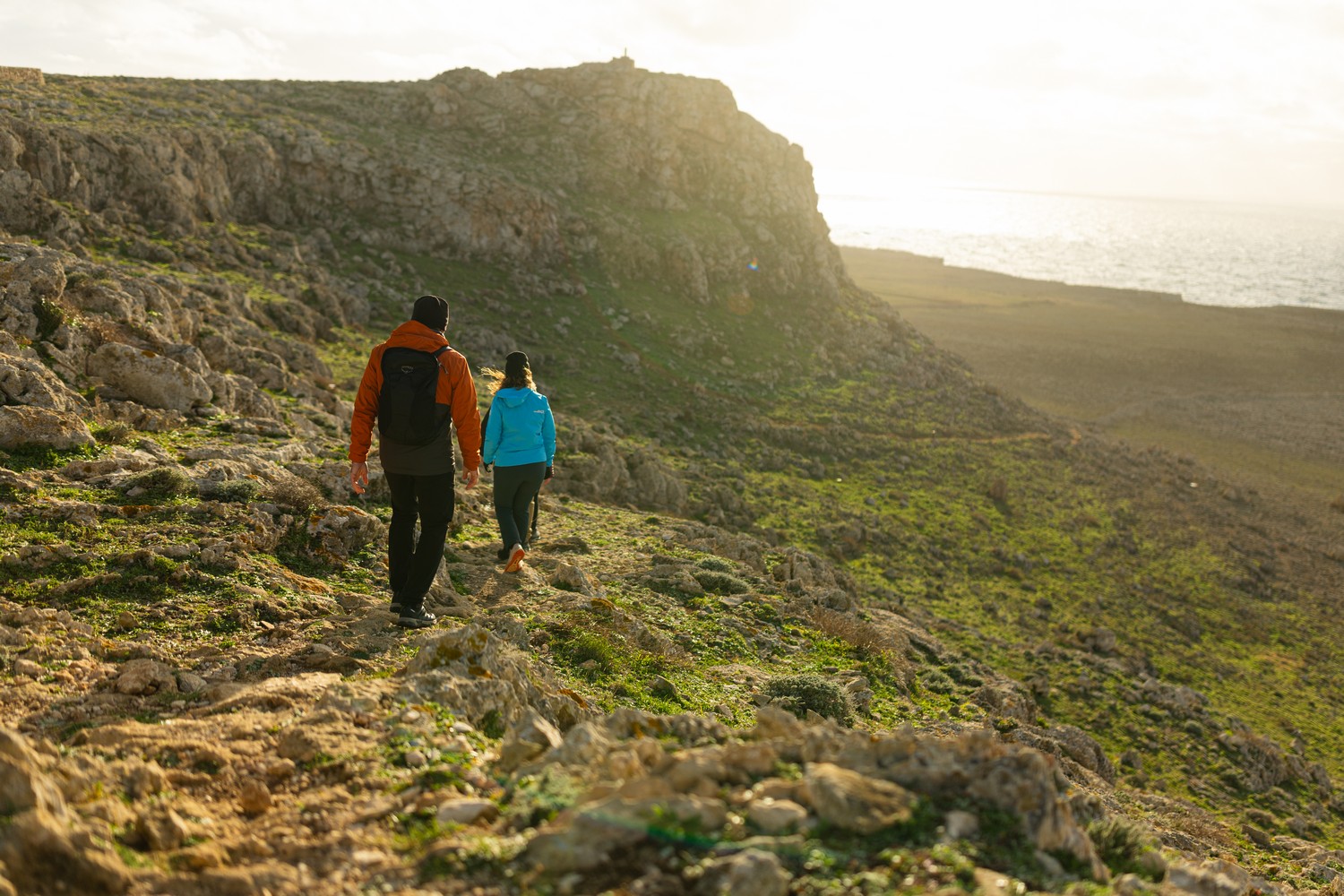
The first hours of the morning are usually the best part of the day. The light is soft and enhances the colours of the landscape, while the air is still cool. Sometimes the body needs a little time to wake up, especially when carrying the fatigue accumulated from previous stages.
Conversation flows easily between adventure companions. On Camí de Cavalls 360º, setting off early brings an immediate reward: fewer people on the trail, a feeling that the route belongs entirely to you and, during spring and summer, the chance to enjoy the scenery before the heat arrives.
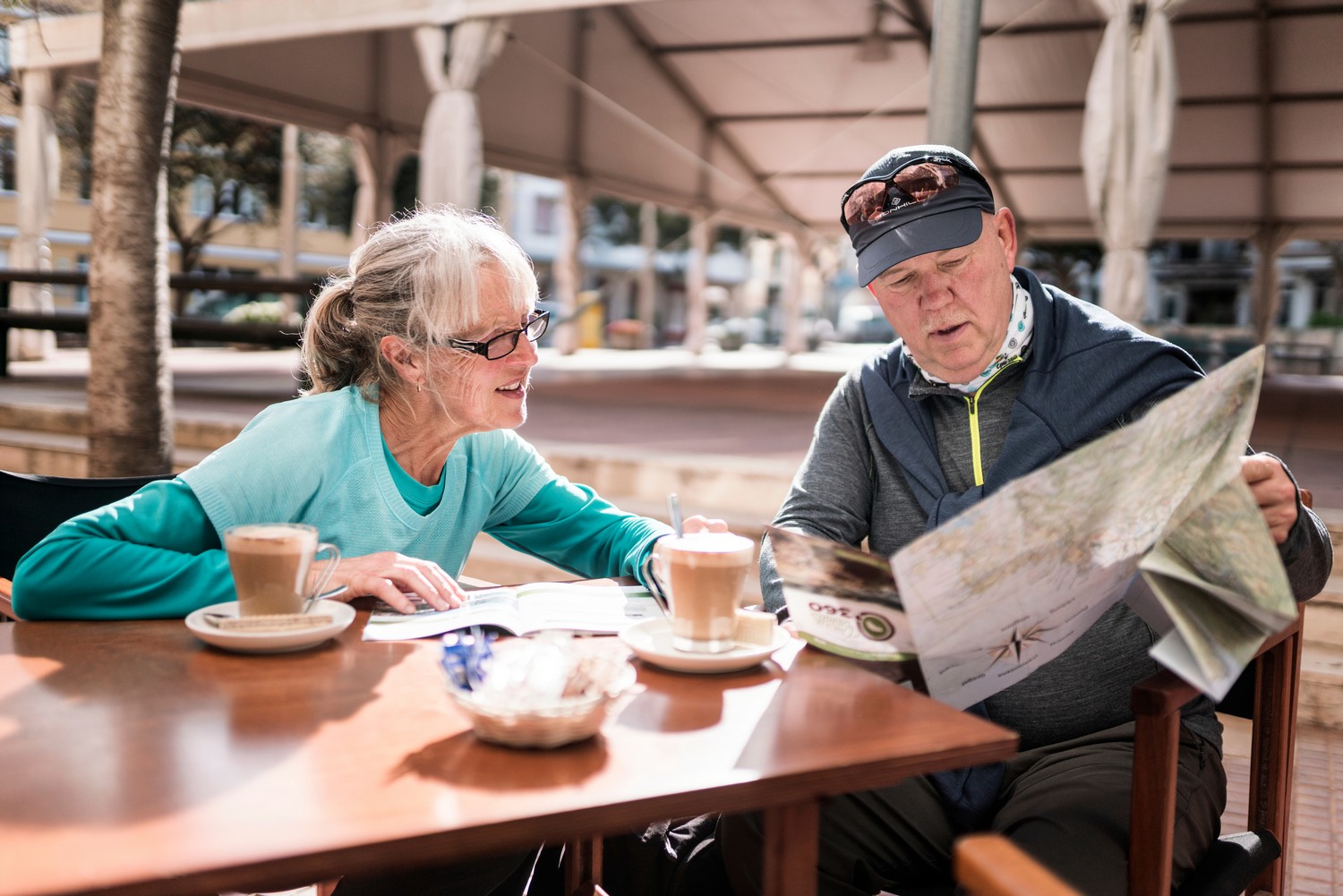
When your body asks for a five-minute break, you’ll probably find a small cove, a viewpoint rock or a patch of shade beneath a pine tree. You stop, have a snack and check the map. This is usually when you settle into the real rhythm of the day: you know how far you’ve come, how far you still have to go and your body has fully warmed up.
Midday: lunch on the trail
Lunch depends very much on the stage. Some stages pass through villages or residential areas where you can stop at a café or restaurant. Others—especially on the north coast—can go for hours without any services at all.
In those cases, lunch is whatever you’ve brought with you: a sandwich, fruit, nuts or food you’ve prepared the night before or that morning.
Sitting on a rock beside the trail, looking out over the sea with dust-covered boots, is one of those memories you’ll take home with you.
Afternoon: the challenge
After midday, most participants experience the toughest moments of the stage. Legs begin to feel heavy, conversations become less frequent and your attention narrows to the trail ahead.
This is the time when Camí de Cavalls stops being a postcard landscape and becomes a genuine physical and mental experience. Your thoughts become simple: one step, then another, then the next bend in the path.
Paradoxically, it’s often the part of the day that people remember most vividly. Not because it’s the most comfortable, but because it’s the most honest.
One useful tip is to always carry a little more food and water than you think you’ll need. A handful of nuts or an energy bar during the final kilometres can save you from dragging your feet to the finish.
The end of the stage: arriving
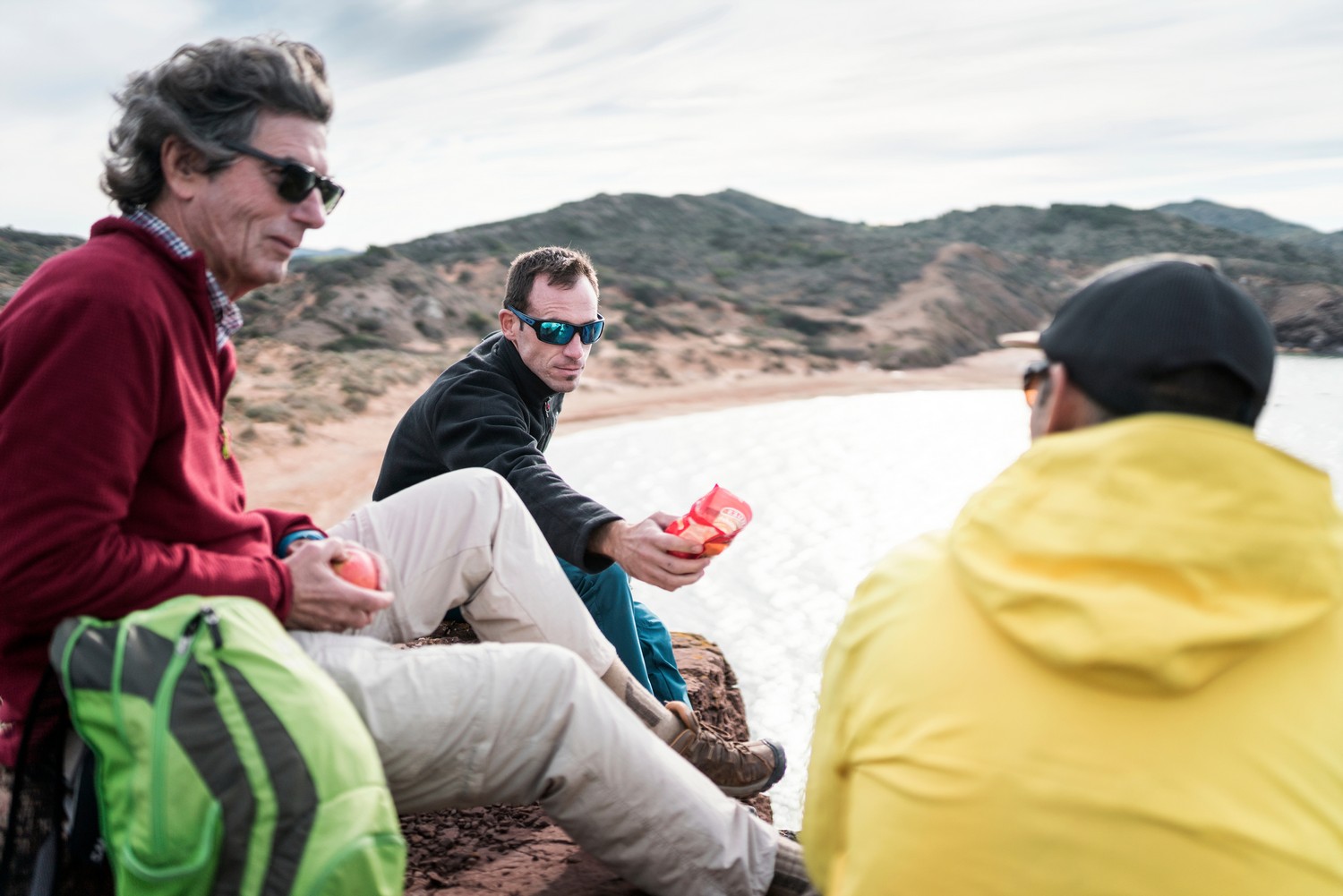
Every arrival feels different. Sometimes it’s a peaceful cove where people stop to soak their feet. Sometimes it’s a village with a welcoming terrace. Sometimes it’s simply the end of a trail, with a member of the Camí de Cavalls 360º team waiting to take you to your accommodation.
In every case, though, the feeling is the same: you’ve had a unique experience, spent valuable time outdoors, become part of a magnificent landscape and followed a trail steeped in history.
And tomorrow, you’ll do it all again.
Once at your accommodation, the ritual is always similar: a shower, clean clothes—the walking gear is already drying—and a moment of doing absolutely nothing. You stretch, take a short walk around the area, look through your photos and perhaps share a few.
Your body begins to process what it has accomplished. It’s also a good moment to review the map and route guide and prepare for the following day’s stage.
Evening: dinner and bed!
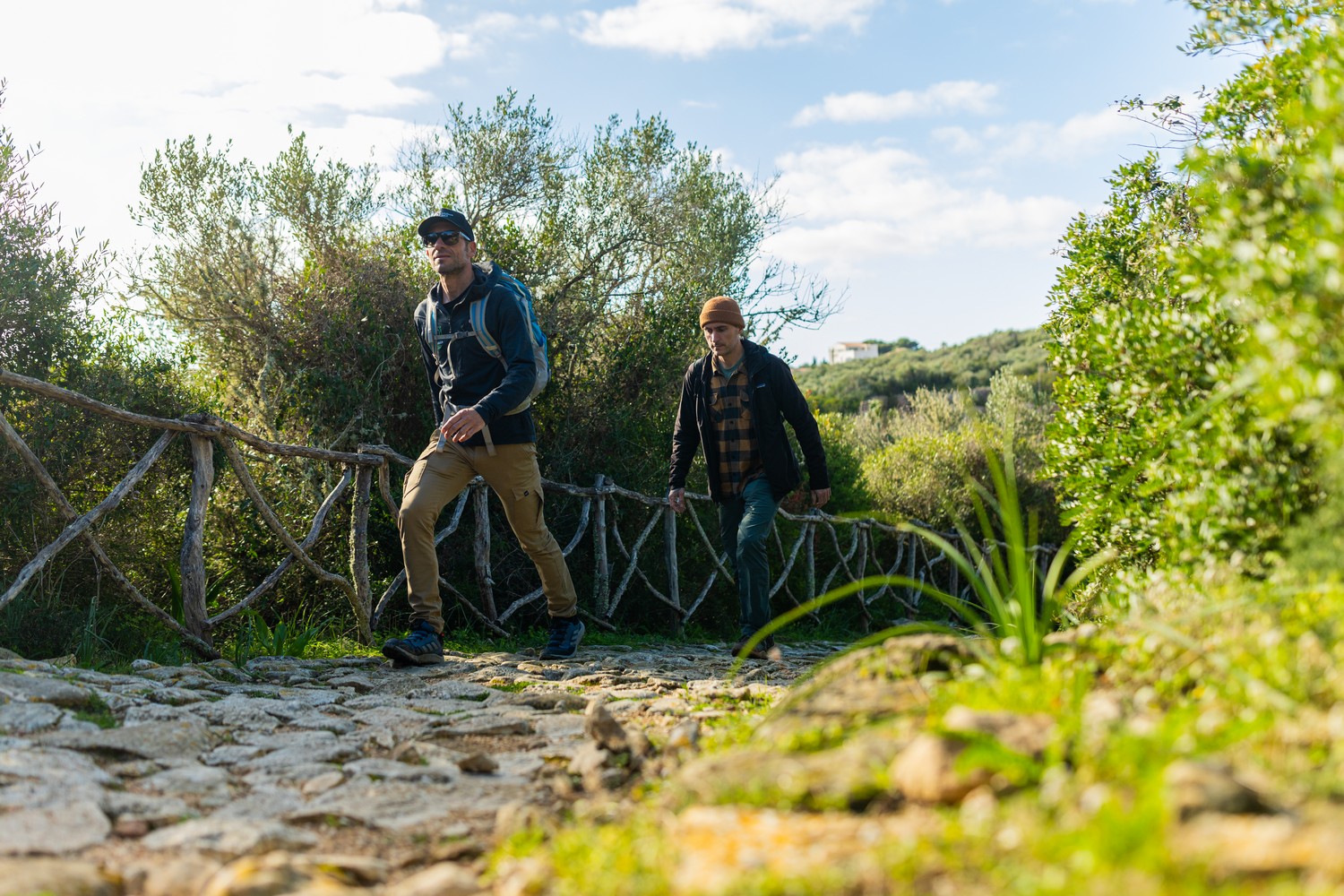
Dinners on Camí de Cavalls 360º tend to be long and delicious. Exercise sharpens the appetite, the calm of the evening encourages conversation among companions and having a good meal waiting at the table is deeply appreciated after a day on the trail.
You share stories from the day, discuss any incidents, listen to everyone else’s experiences and start planning tomorrow’s stage. Throughout the route, you’ll also stay in regular contact with the Camí de Cavalls 360º team, who will be happy to provide advice and local knowledge.
Bedtime gradually gets earlier without anyone really deciding it. By the third day, very few people stay awake beyond eleven o’clock. And somehow, it feels completely natural.
What if I’m doing mountain biking or trail running?
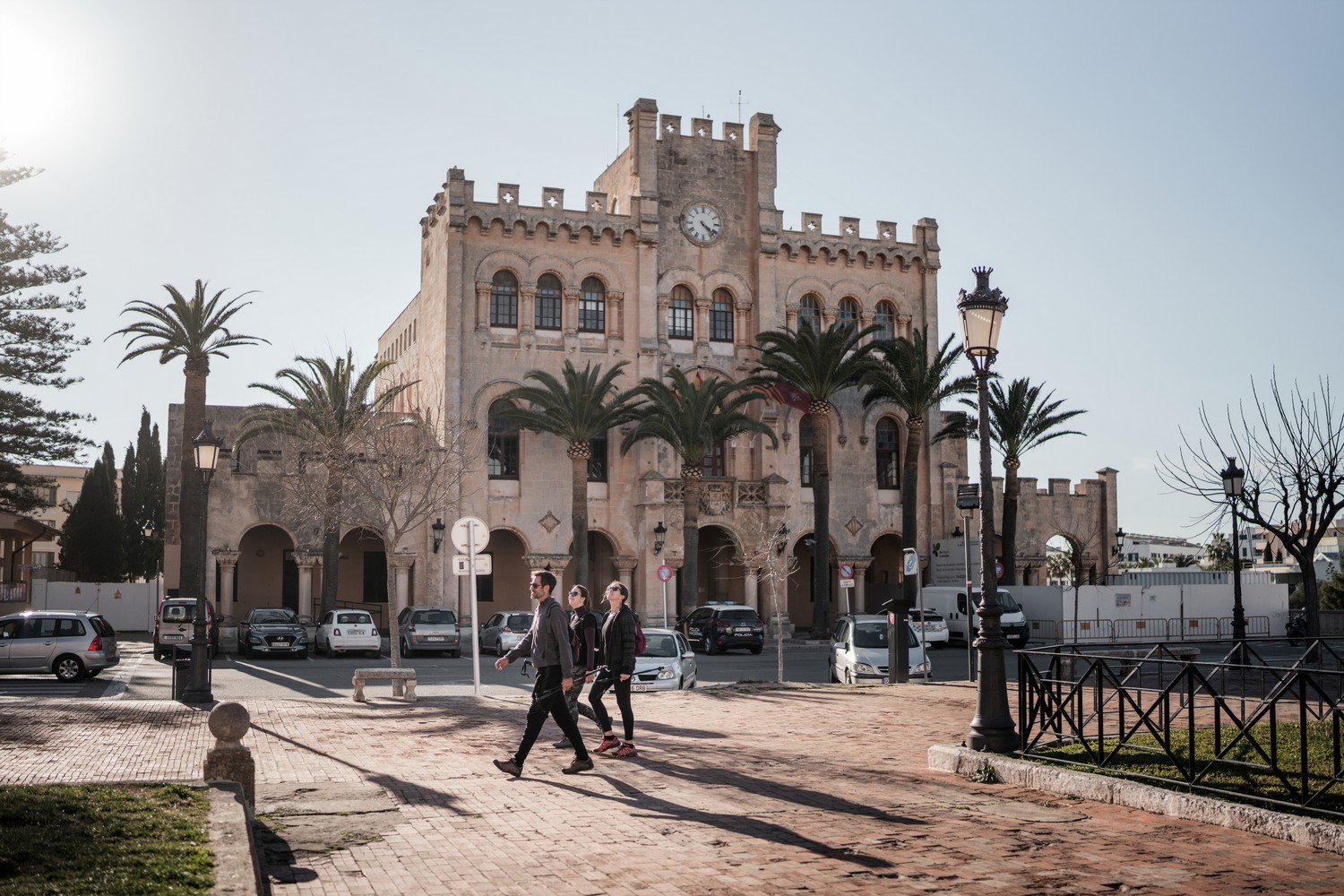
The overall structure of the day is similar in all three activities, but the pace and timings are different.
In mountain biking, you’ll need to add a bike check to your afternoon routine, and keep in mind that the technical terrain requires constant concentration, creating a different kind of fatigue from walking.
In trail running, stages tend to finish much earlier—sometimes around midday—which leaves the afternoon free for recovery, stretching and preparing for the next day.