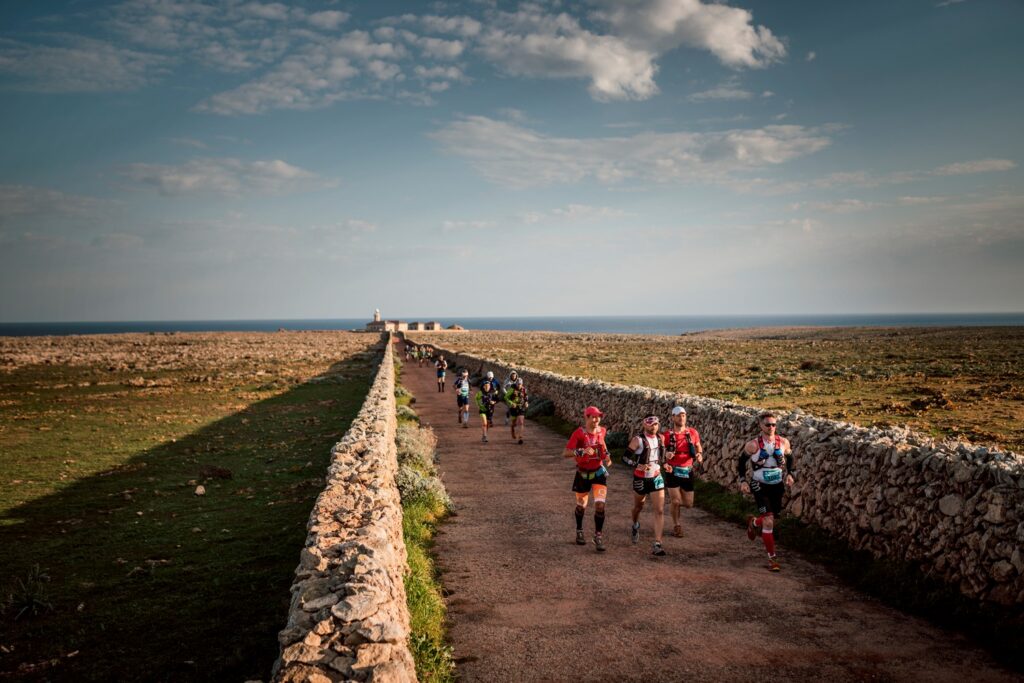
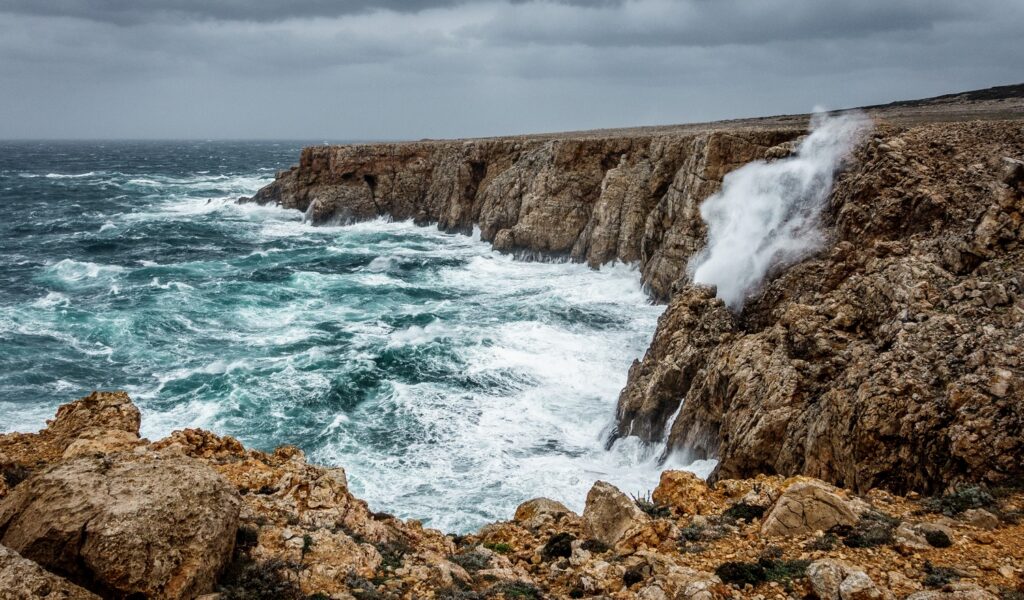
Stone and the tramontana are the driving forces behind a dreamlike landscape that could easily evoke another planet. The harsh conditions allow vegetation to grow only close to the ground, stunted and windswept. Human presence is also etched into the landscape in the form of dry-stone structures, a lighthouse at the end of the world and the traces of tragic events from the past.
Stone and the tramontana are the driving forces behind a dreamlike landscape that could easily evoke another planet. The harsh conditions allow vegetation to grow only close to the ground, stunted and windswept. Human presence is also etched into the landscape in the form of dry-stone structures, a lighthouse at the end of the world and the traces of tragic events from the past.
By the time the Camí de Cavalls 360º route has covered almost all of northern Menorca from Maó and is about to turn south towards Ciutadella, participants enter one of the most magical and striking landscapes of the entire island circuit.
Between the residential areas of Cala Morell and Calespiques, approximately, the route crosses the limestone plateau of north-western Menorca. You will not easily forget what your eyes see here, nor what your body experiences as you make your way through this landscape on foot or by mountain bike.
Desolate, rugged, harsh, austere, wild and untamed are just some of the words that can describe the character of this area, sculpted by the tramontana until it took on an almost Martian appearance. The northerly wind has relentlessly shaped this landscape, making life difficult for vegetation: for kilometres, there is not a single tree or patch of shade. Plants are forced to grow close to the ground, while every gust of wind reminds them what happens when they dare to raise their heads.
Yet the beauty of the landscape more than makes up for it: in its very desolation, in the views out to sea from the tops of the cliffs, in the dry-stone walls and structures, and in extraordinary natural rock formations such as Pont d’en Gil.
On foot or by mountain bike
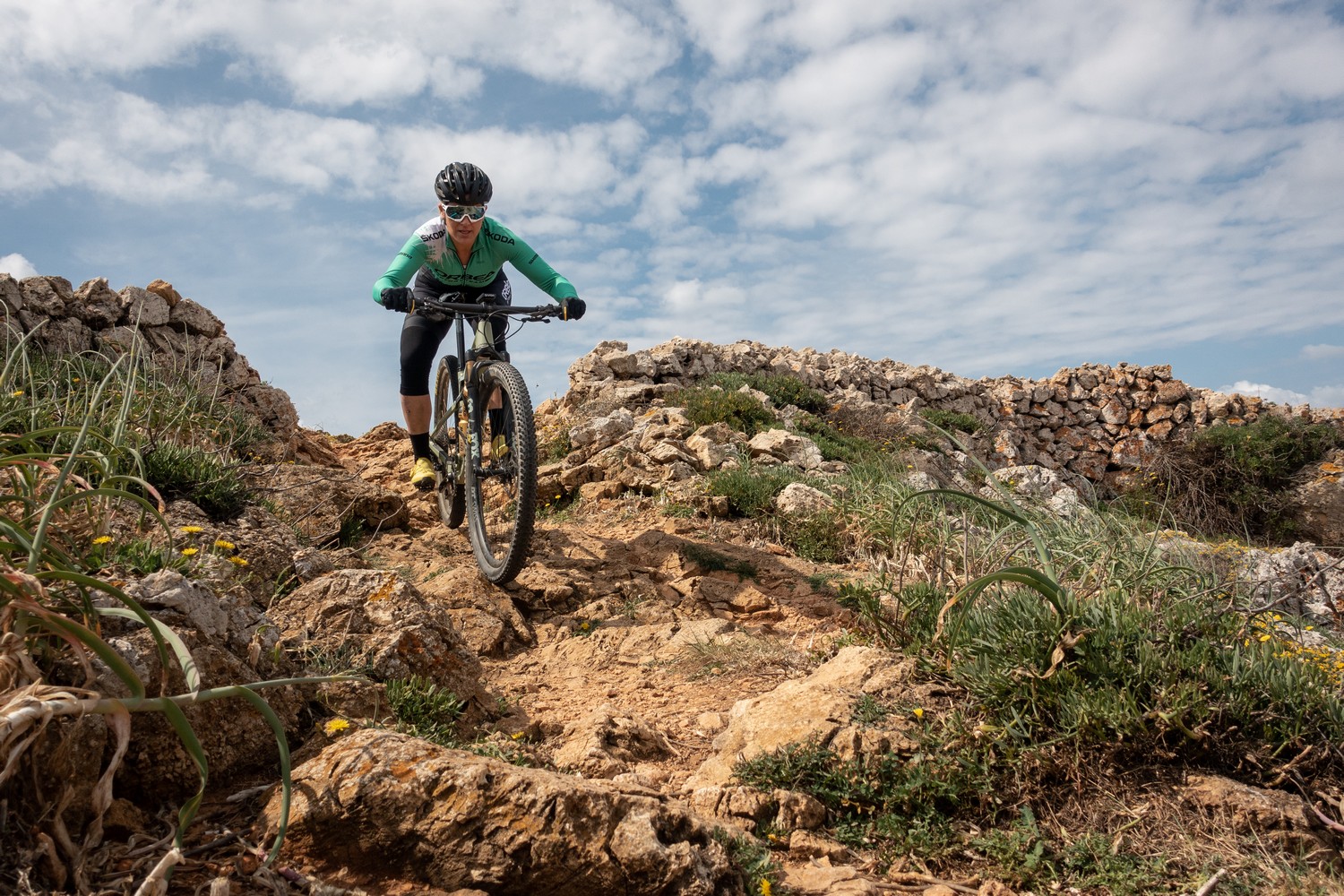
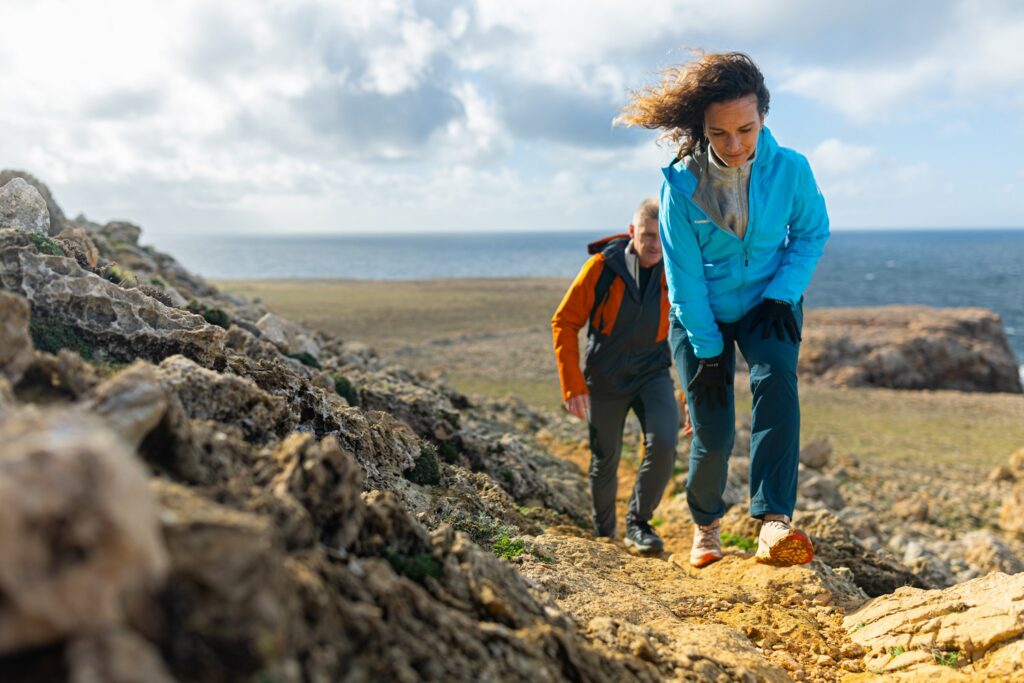
For hikers and trail runners, this section of Camí de Cavalls 360º is challenging terrain, with a surface covered in stones and an extremely uneven trail. For cyclists, it is even more demanding. The technical difficulty is high, and only the most experienced riders are able to cycle most of this section. For everyone else, it can become a real ordeal. That is why Camí de Cavalls 360º offers alternative routes that avoid a significant part of this section and are highly recommended for many participants.
In addition, whether you are travelling on foot or by bike, this area means continuous exposure to the sun, with no water points along the way. It is therefore essential to plan carefully how much water you will need to carry for a demanding day like this.
The tragedy of the Général Chanzy
This stretch of Menorca’s coastline is marked by high cliffs, tirelessly battered by the waves. History left its mark here with a tragic episode involving a French steamship called Général Chanzy, which operated between Marseille and Algiers. In the middle of winter in 1910, it encountered a severe storm off Menorca and was wrecked against this coast.
The death toll was devastating: of the 157 people on board, only one survived, Marcel Bodez. The others lost their lives, as recalled by a memorial cross marking the shipwreck in the Punta de Son Escudero area. The place name Calesmorts (Dead Men’s Cove), which is also found in other parts of the island prone to shipwrecks, is another reminder of the tragedy.
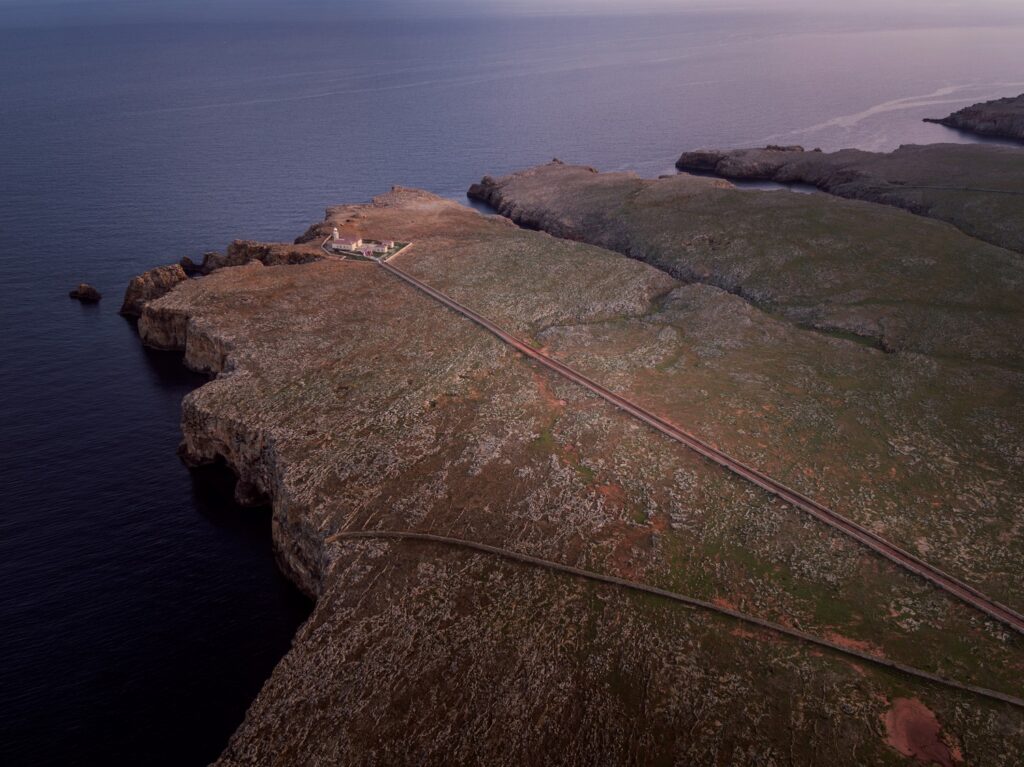
The disaster caused a huge public reaction, and the French government put pressure on the authorities for a lighthouse to be built here. Just three years later, the Far de Punta Nati was already operational. It remains almost the only visible reminder of human presence in this stark landscape.
Older generations in Ciutadella still call it Sa Farola Nova (The New Lighthouse), distinguishing it from the municipality’s other lighthouse, Sa Farola, built fifty years earlier at the entrance to the harbour.
Dry stone
The lighthouse is not, however, the only trace of human activity around Punta Nati. Participants in Camí de Cavalls 360º discover them step by step. For centuries, farmers have also demonstrated remarkable determination in making this seemingly inhospitable landscape as productive as possible. Their tool was dry stone.
Around Punta Nati stretches an extensive network of dry-stone walls, including spectacular dry-stone structures built to shelter livestock. These include barracas, circular buildings with a distinctive stepped structure, and ponts de bestiar (livestock bridges), which have a rectangular plan.
The tradition has also left its mark in the form of numerous gates made from wild olive (acebuche), found here and in many other parts of Menorca. They allow people to pass through dry-stone walls while keeping livestock from getting through. They are an emblematic feature of the Camí de Cavalls, and everyone using the route should take care to open them gently and leave them closed behind them.