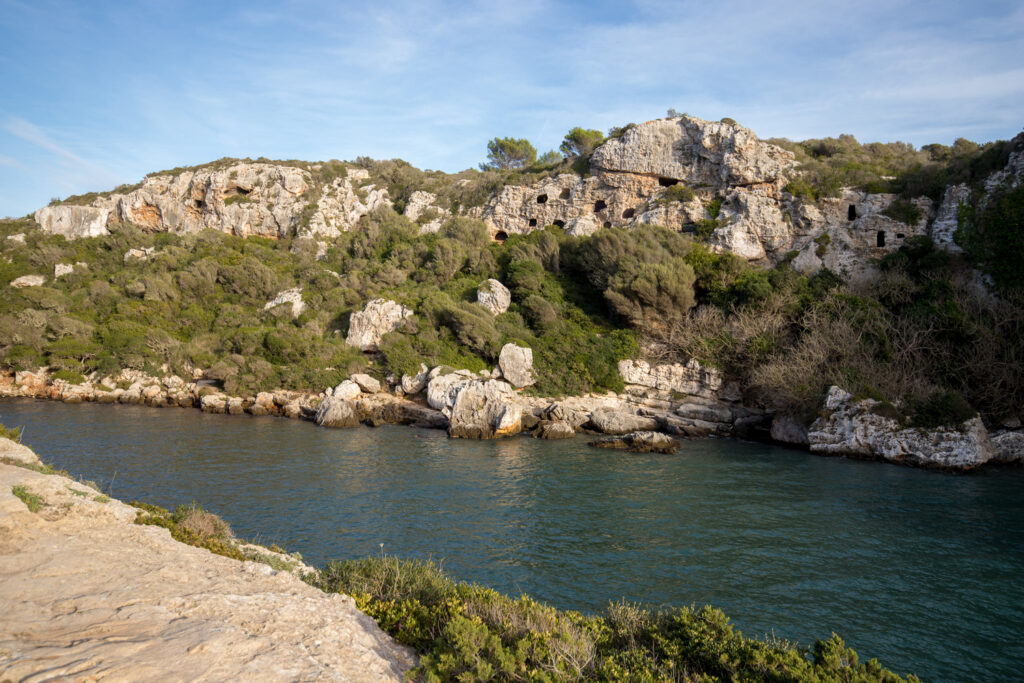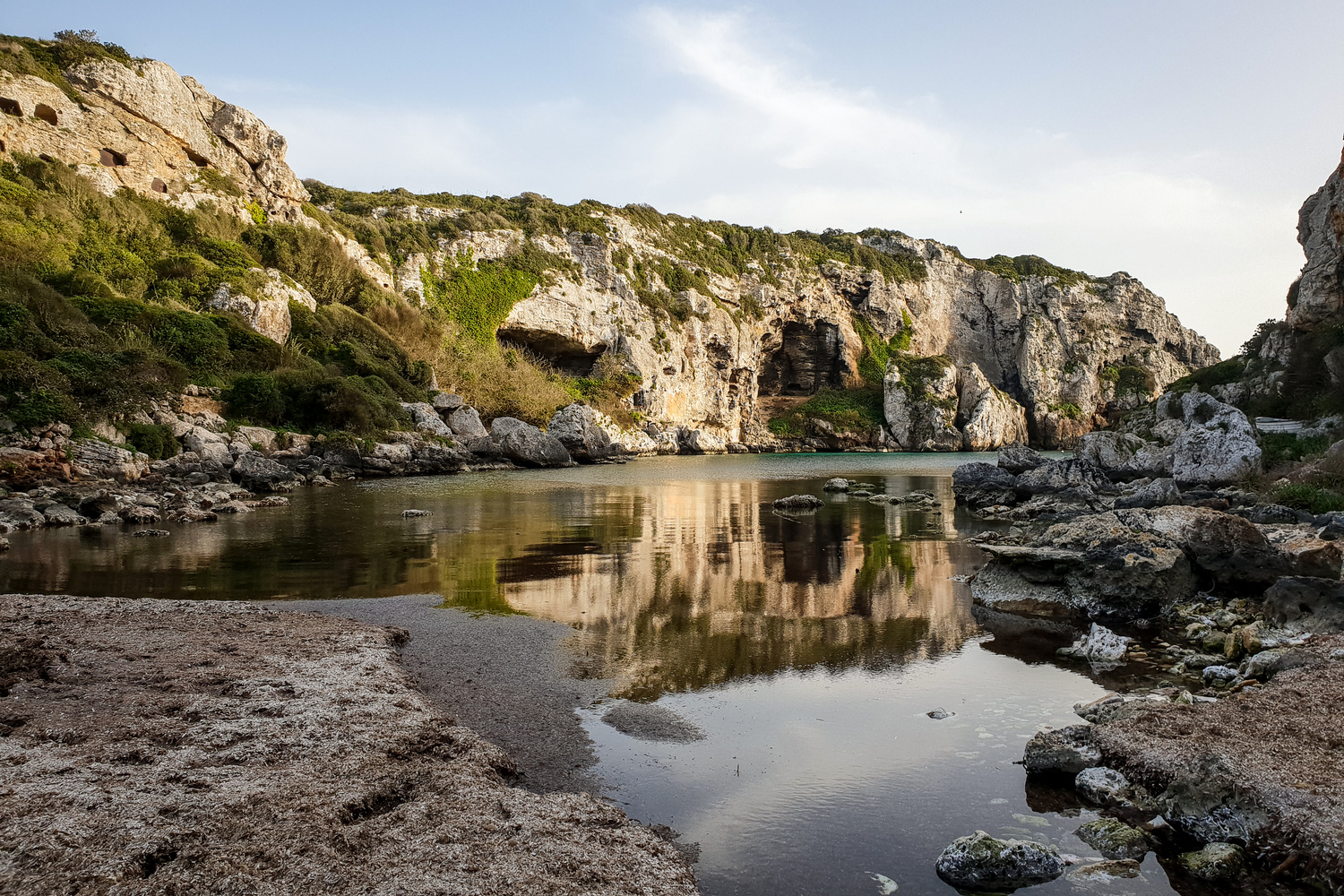
The Camí de Cavalls 360º section between Cala en Porter and Es Canutells hides one of Menorca’s best-kept gems: Calescoves. This double cove, beyond its stunning scenery, is home to the island’s largest Talayotic necropolis and an important archaeological site from Roman times.
Camí de Cavalls 360º doesn’t pass exactly through the double cove of Calescoves. Even so, our road book specifically recommends taking the short detour that leads there—just about 300 metres. That’s the distance separating hikers, cyclists and runners from a place that perfectly combines landscape, history and Mediterranean magic. It’s somewhere time seems to stand still, where nature and history blend together.
Beyond its captivating scenery, Calescoves contains the largest Talayotic necropolis on the island. Archaeologists have also found remains of a prehistoric wall and a small settlement with a Roman-era landing place.
A captivating landscape
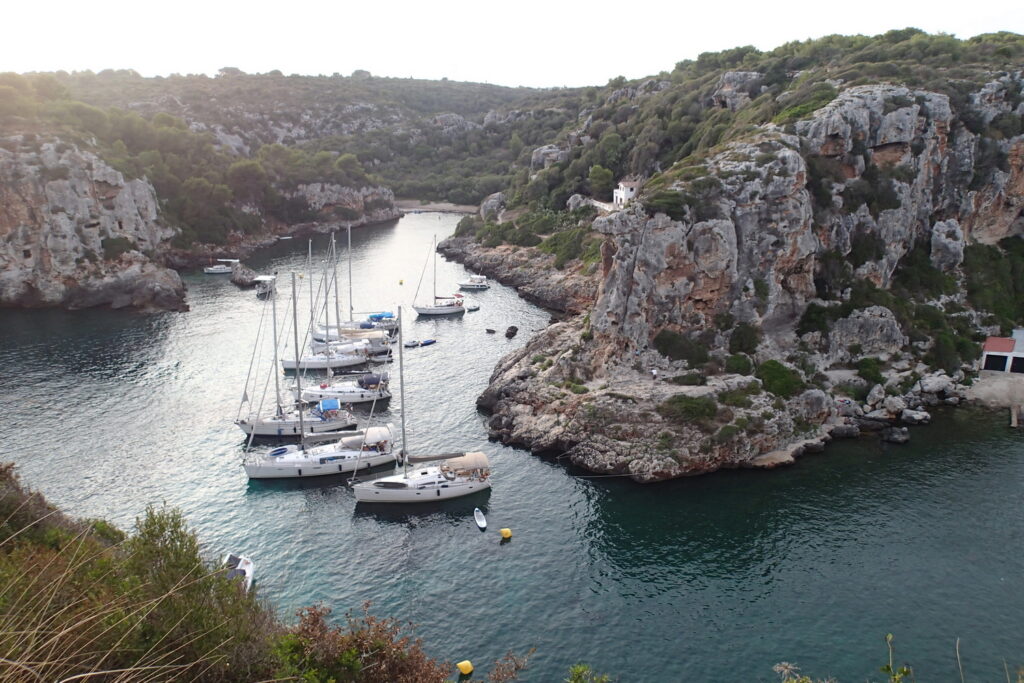
Calescoves is a small bay surrounded by rocky cliffs that plunge into an intensely blue sea, contrasting with the green of typical Mediterranean shrubs. Here the coastline forms a mosaic of rocks, natural caves and shapes carved by wind and sea—a wild landscape that rewards the effort of getting there with spectacular views and a deep sense of calm.
The descent into the Calescoves ravine is one of the most technical sections for mountain biking along the entire route. The climb back up is also technically demanding for cyclists. For most mere mortals, pushing the bike for part of the way is unavoidable.
History carved in stone
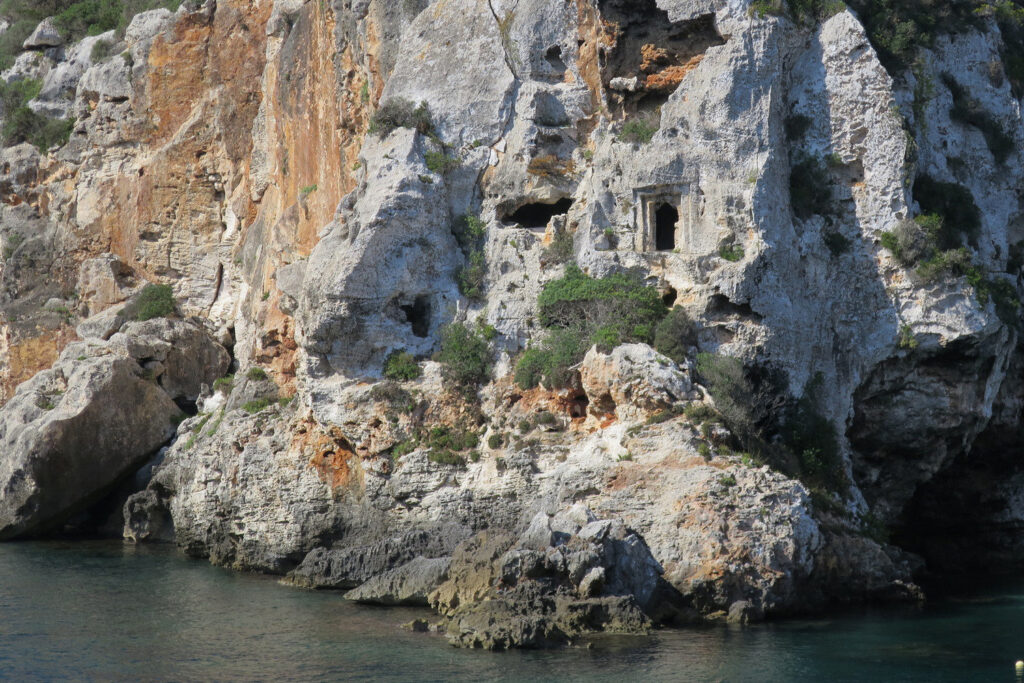
What truly sets Calescoves apart from many other coves in Menorca is its archaeological value. The site holds one of the island’s most important prehistoric necropolises, with more than a hundred caves and hypogea carved directly into the cliff faces. These cavities were used as burial places from the Talayotic period (around 1400–550 BC) until the arrival of Roman rule, offering a unique insight into ancient funerary practices and the complex relationship between the first inhabitants and the coastal landscape.
Alongside the tombs, remains of a prehistoric landing place and the walls of a coastal settlement can still be seen at Calescoves. One of the caves played a sacred role during Roman times—the so-called Cave of the Jurors. Another cave, known as “the Church”, functioned as a sanctuary where the founding of Rome was celebrated each year.
Together, these archaeological remains show how this place was used in many different ways over thousands of years—not only as a necropolis, but also as a maritime and cultural meeting point.